
Here's a design secret: the tile you pick is only half the story. The way you lay it can completely change how a room feels. The exact same rectangular white tile can look crisp and modern, classic and cozy, or bold and dramatic, depending on the pattern.
Whether you're updating a kitchen backsplash, refreshing a bathroom, or choosing finishes for a new project, here's a quick guide to the most popular layouts and when to use each one.
The Classics
Straight lay (stacked). Tiles line up in a simple grid, with the joints matching up both ways. It's clean, modern, and works especially well with square tiles. Stacked layouts also show off large-format tiles beautifully because there's less visual noise.
Running bond (brick). Each row is offset from the one beneath it, like a brick wall. It's the go-to for subway tile, and for good reason. It feels timeless, forgives small imperfections, and works in nearly every style from farmhouse to contemporary. Our tip: with longer or large-format tiles, a smaller offset, often around one-third, tends to look better and helps avoid uneven edges.
Diagonal. Turn a square tile 45 degrees and a room suddenly feels larger. Diagonal layouts draw the eye across the space, which makes them useful in small bathrooms and entryways. The trade-off is more cuts at the edges, which means more waste and more labor.
The Showstoppers
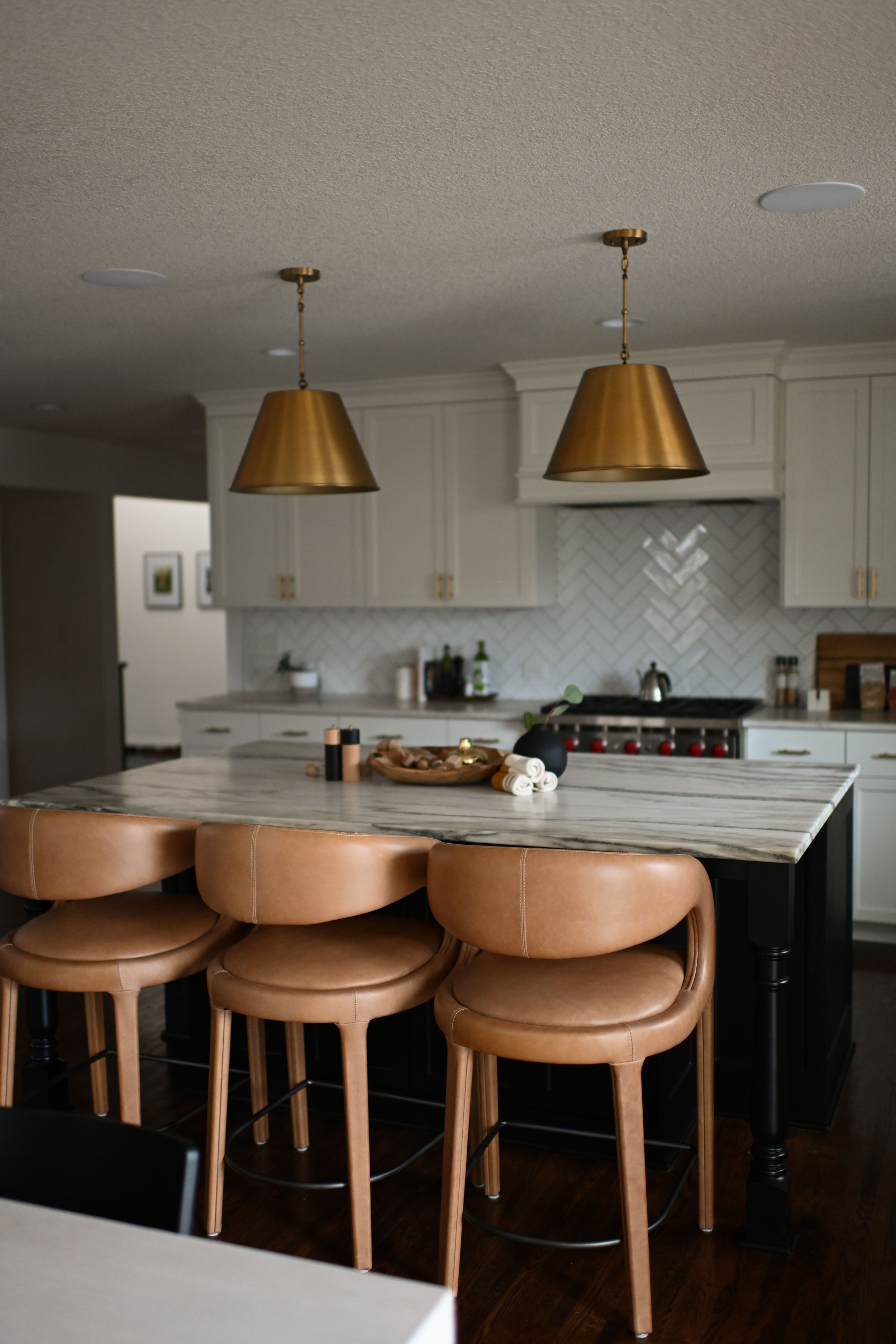
Herringbone. Rectangular tiles meet at right angles to form a zigzag, and the result is rich, textured, and elegant. Herringbone is a favorite for backsplashes, shower walls, and entryway floors. It adds movement and visual interest even in a neutral palette, which makes it a great way to add personality without adding color.
Chevron. Looks similar to herringbone at first glance, but the tile ends are cut at an angle so the pattern forms continuous V shapes. It's sleeker and more graphic, and it usually costs more because the tiles are specially cut.
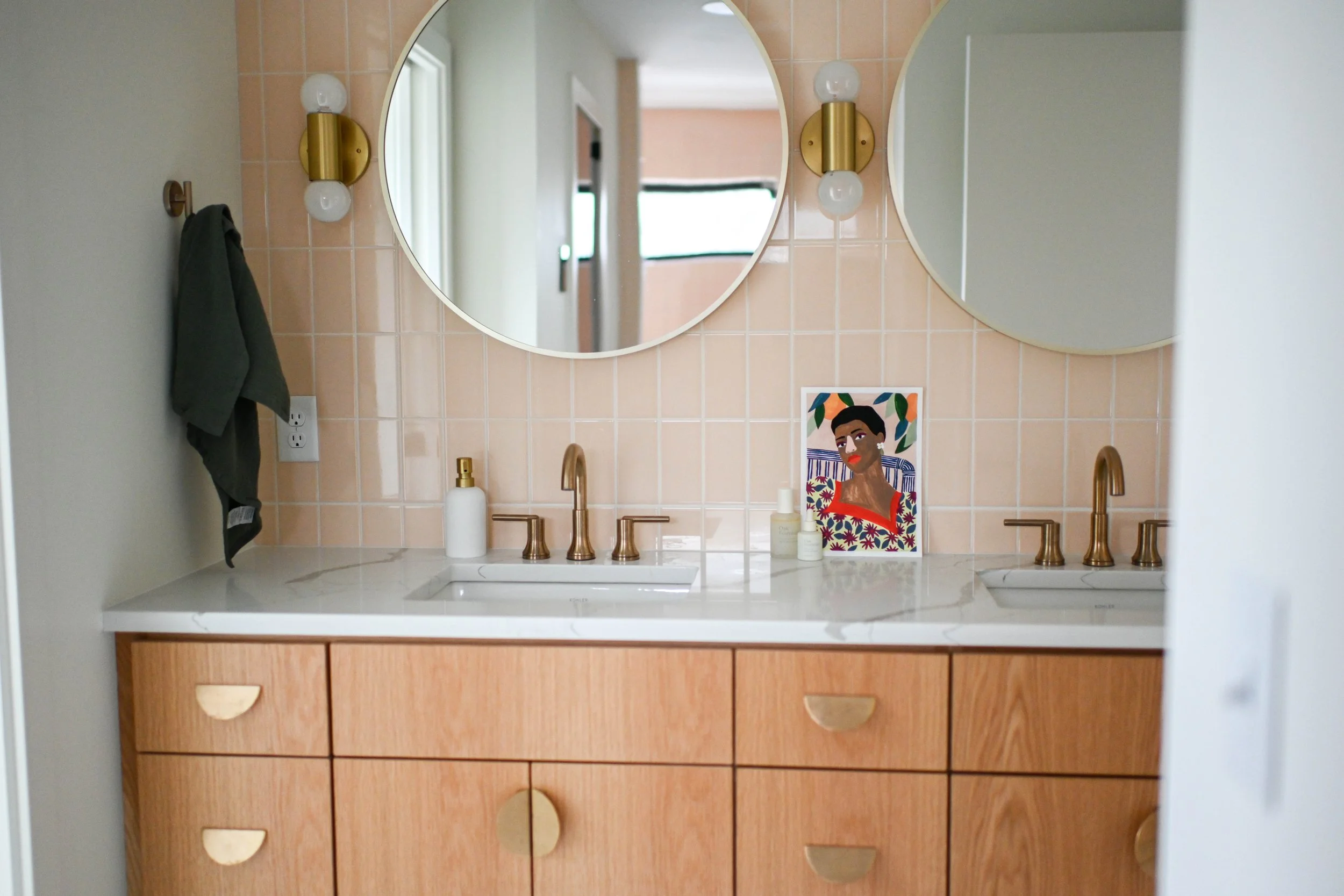
Vertical stack. Take that subway tile and turn it on its end. A vertical stack draws the eye up, making ceilings look taller. It's a simple, budget-friendly way to make a shower or backsplash feel more modern.
Basketweave. Pairs of tiles alternate direction, creating a woven look. It's a vintage favorite, especially in older homes, and it pairs beautifully with small mosaic tiles on bathroom floors.
Hexagon. Honeycomb layouts add geometry and a retro-modern feel. They look great in black and white, soft neutrals, or bold colors, and they're popular for bathroom floors.
What About Zellige?
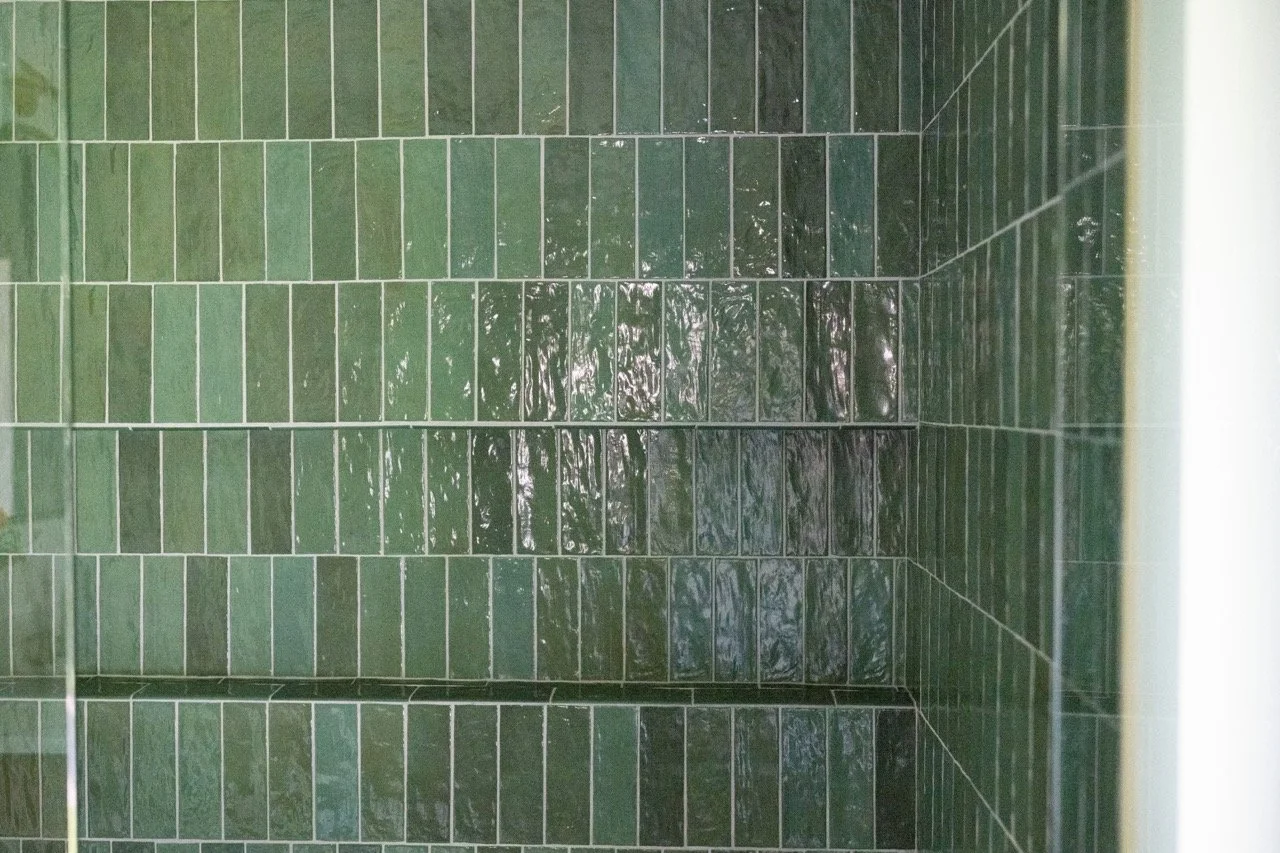
Zellige is a handmade, glazed tile with roots in Moroccan craftsmanship (and it’s one of our all time favorites!). We love that no two pieces are exactly alike. Edges are slightly uneven, and the glaze pools and varies in tone. Instead of a perfect finish, you get shimmering depth and a one-of-a-kind look.
Since zellige is irregular, layout choice matters a lot. A straight or running bond pattern lets the natural variation shine, and a slightly wider grout line helps hide the uneven edges. It's gorgeous on a backsplash or fireplace surround, but it's usually best kept to walls rather than high-traffic floors, and it should be sealed and cared for as the manufacturer recommends.
Don't Forget the Grout
Grout is the secret sauce that changes the whole look:
Matching grout blends in and makes the tile surface feel seamless and calm.
Contrasting grout outlines each tile and makes the pattern pop, which is great with herringbone or hexagons.
Wide vs. narrow joints shift the vibe. Thin lines feel modern and sleek, while wider joints feel handmade and rustic.
A Few Practical Tips
Order extra. Patterns with angled cuts, like herringbone and diagonal layouts, typically need more overage than a straight lay.
Match the layout to the room. Busy patterns shine in small, simple spaces. In a large room with lots going on, a quieter layout is often better.
Consider maintenance. More grout lines mean more to clean. Light grout shows stains faster, so consider a color that suits your lifestyle.
Hire a pro for complex patterns. Herringbone and chevron take skill. A great tile setter is worth the money.
Choosing Your Pattern
Start with the room, not the tile. Decide on the mood you want, whether calm, graphic, or handmade, then choose the layout that delivers it. A running bond keeps things relaxed and timeless, a vertical stack adds height, and herringbone brings drama. When in doubt, mock up a small section with your actual tile and grout before committing. Seeing it in your own light tells you more than any sample board!
As always, if you need help with design decisions, our team is here.